The Roma as Agents of the “G*psy Question”
September 30th, 2026 | Published in Geschichte & Gedenken, Literatur & Bücher, Politik, Rassismus & Menschenrechte
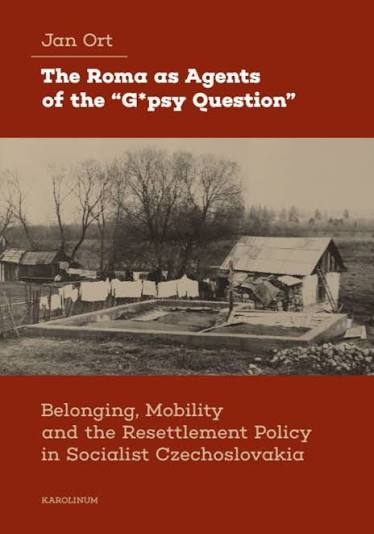 Jan Ort: The Roma as Agents of the “G*psy Question”. Belonging, Mobility and the Resettlement Policy in Socialist Czechoslovakia, Karolinum Press: Prague 2024.
Open Access: →zum Download [CC-BY-4.0]
Das Buch untersucht die Assimilationspolitik des kommunistischen Regimes in der Tschechoslowakei der 1960er-Jahre, die durch die Zwangsumsiedlung tausender Roma-Familien deren Lebensweise zerstören sollte. Statt nur die staatliche Perspektive einzunehmen, beleuchtet der Autor die konkrete Umsetzung vor Ort und stellt die Erfahrungen sowie die Handlungsfähigkeit der Roma selbst in den Mittelpunkt, die die staatlichen Maßnahmen oft auch für ihre eigenen Lebensstrategien nutzten.
Verlagsbeschreibung (Karolina Press):
The story of Romani people in communist Czechoslovakia has long been framed by a discriminatory policy of assimilation, and thus by fatal interventions into Romani family ties and their broader socio-cultural systems. Paradoxically, such a narrative failed to satisfactorily integrate the perspective of the Roma themselves, who often associated the same period with an unprecedented experience of social inclusion and material security. In his book, Jan Ort examines the state policy that in the mid-1960s aimed at the definitive elimination of “G*psy backwardness” through the placement of thousands of Roma families in non-Roma society, thus becoming a symbol of the social engineering interventions of the communist regime in the lives of Czechoslovak Roma. In contrast to the predominant focus on the perspective of state authorities, the author seeks to map the practice of this policy in specific places, with an emphasis on the experiences and agency of the Roma themselves, especially those who had their homes in eastern Slovakia. Read the rest of this entry »

